
Plastic pollution is recognised globally as a growing environmental challenge. Understanding the amount of plastic present in subsea infrastructure, and how to best minimise any associated risks, is of key importance.
The INSITE Plastics Project aimed to answer pivotal questions surrounding the potential release of plastics from pipelines over time and the potential risks in the marine environment.
The project had three main objectives:
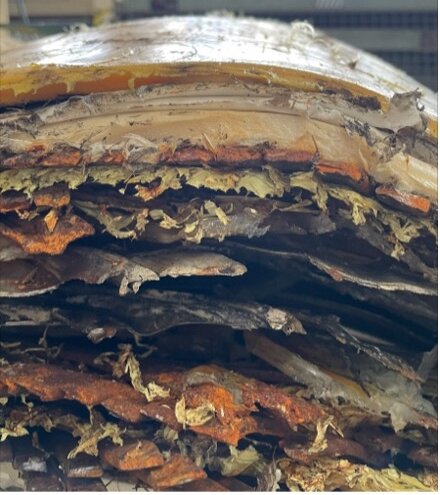
Figure 1: Cross section of flexible flowline recovered from the Northern North Sea during a decommissioning campaign in Spring 2024. Image shows High Density Polyethylene outer coating (yellow) and internal layers of plastics and metals.
Based on available records it is estimated that more than 29,304 km (total length) of pipelines and umbilicals were deployed on the UK Continental Shelf between the 1960s and 2022. If laid end-to-end these pipelines and umbilicals would stretch nearly three quarters of the way around the Earth. This infrastructure contains an approximate mass of 218,000 tonnes of plastics, which is about the same weight as a fully loaded modern container ship, with potential for around half of this to be decommissioned in situ (i.e. leaving it in place following removal of process fluids by flushing).
The project analysed sections of decommissioned pipelines and umbilicals recovered from the Northern North Sea, which had been in situ for approximately 22 years, to understand degradation rates and processes. Analysis showed measurable physical and chemical degradation indicating some loss of plastics into the environment may have occurred.
Based on these findings and using previous modelling studies (Testoff et al., 2022; Oluwoye et al., 2023), the project estimated annual releases of microplastics from pipelines and umbilicals to the UKCS to be between 4.5 tonnes – comparable to the minimum estimation of discharge of microplastics from UK rivers to the North Sea (Schmidt, Krauth & Wagner, 2017) – and 500 tonnes – which exceeds the maximum estimation of discharge from UK rivers to the North Sea. The actual releases depend on factors that affect degradation rates, such as pipeline materials, temperature, current flows (hydrodynamic energy), sediment type (abrasive material) and biological processes.
The project findings highlight that the quantities of microplastics from pipelines could be substantial, presenting a potential environmental risk and emphasising the need to consider pipelines in decisions surrounding both the decommissioning of existing structures and the design of new infrastructure, for oil and gas extraction and renewable energy developments. The findings emphasise the need to consider the environmental and economic costs and benefits of removing infrastructure compared to decommissioning in situ.
The samples examined in this project were from a relatively benign area of the North Sea, i.e. deep cold water flowing in slowly over a muddy seabed. In order to build a more comprehensive picture of the rates of degradation and microplastic generation from pipelines, further sampling is needed from a range of contrasting subsea conditions including differing seabed energies, depths and material types.
The accumulation of plastic debris from across society, including that used in pipelines, represents a global environmental challenge highlighting the need to make informed decisions on how to minimise the release of plastic to the environment across all sources. Knowing the amounts of plastic already present in the subsea environments, and understanding how best to minimise any associated risks is of key importance.
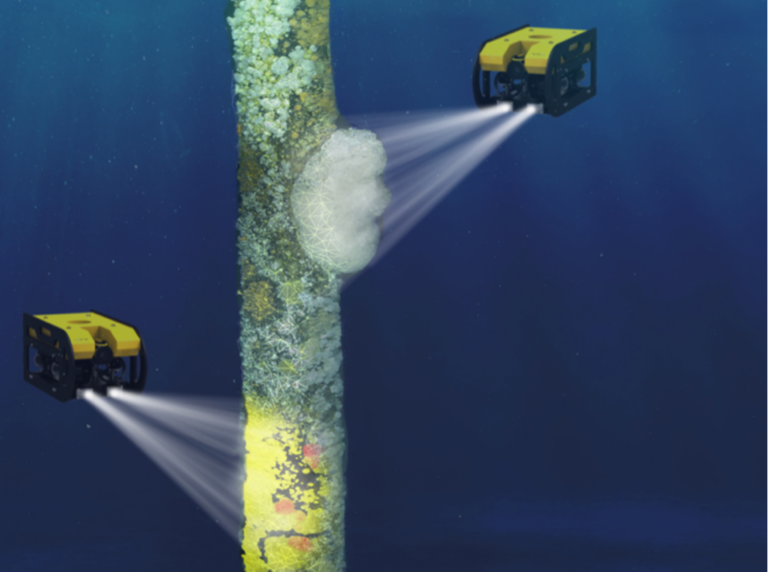
Through photogrammetry, AI and close industry collaboration, NS3D is revealing how much marine life thrives...

With a growing number of decommissioning projects worldwide, as ageing structures reach the end of...
We regularly publish updates on the projects that are directly funded by the Programme and other related research. If you would like to be kept up to date, sign up for our Connections newsletter.